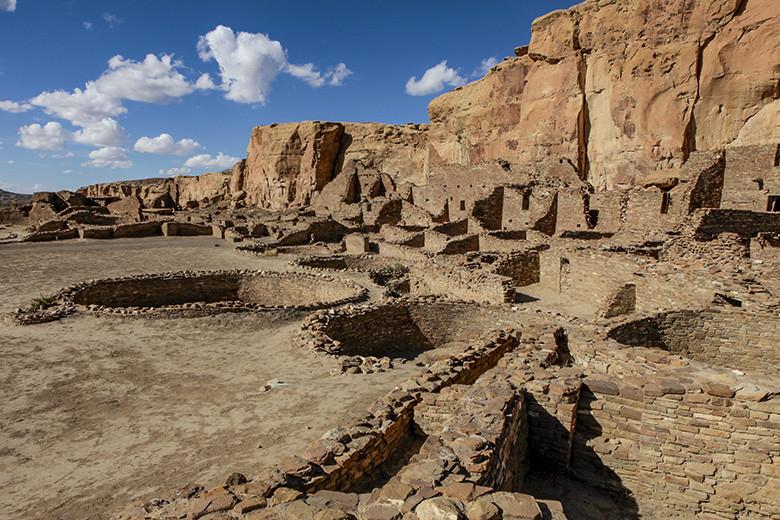
Chaco Canyon should be called Choco Canyon, because researchers have found traces of *chocolate* in cups found at this site dating back to 1000 - 1125 AD.
-
Chaco Canyon should be called Choco Canyon, because researchers have found traces of *chocolate* in cups found at this site dating back to 1000 - 1125 AD.
This is amazing: Chaco Canyon is in a dry part of New Mexico, 1900 kilometers north of where cacao grows. But the cups look like those that Mayans used for chocolate-drinking rituals! And archeologists have also found remains of parrots and macaws in Chaco Canyon. This suggests enormous trading routes.
(1/3)
-
Chaco Canyon should be called Choco Canyon, because researchers have found traces of *chocolate* in cups found at this site dating back to 1000 - 1125 AD.
This is amazing: Chaco Canyon is in a dry part of New Mexico, 1900 kilometers north of where cacao grows. But the cups look like those that Mayans used for chocolate-drinking rituals! And archeologists have also found remains of parrots and macaws in Chaco Canyon. This suggests enormous trading routes.
(1/3)
For more on chocolate at Chaco Canyon:
https://www.nps.gov/chcu/learn/historyculture/pre-columbian-chocolate-discovered-at-chaco.htm
"From 2004-2007 a University of New Mexico (UNM) research project re-excavated the trenches first dug in Pueblo Bonito’s middens under Neil Judd in the 1920s. Of the hundreds of thousands of pot sherds that were recovered, archaeologist Patricia Crown selected five for her research. She is a ceramics specialist at UNM’s Department of Anthropology. She designed the project, and W. Jeffrey Hurst from The Hershey Center for Health and Nutrition performed the research. They chose five pot sherds for organic residue analysis, three of which were likely from cylinder jars. The pieces date to between 1000 and 1125 AD based on their decorative styles.
Only the three sherds most likely from cylinder jars exhibited trace theobromine, a conclusive indicator of cacao or chocolate. The implications of this find are extraordinary. The cacao plant grows only in certain tropical climates, and the nearest possibility for Chaco is Central Mexico. We already know the Chacoan people traded with Mesoamerican cultures for exotics like copper bells and scarlet macaws, but cacao suggests a more ritual connection than other Mesoamerican goods. In some Maya ceremonies a cacao beverage was frothed by pouring the liquid from one vessel to another. Likewise, the cacao found at Chaco was probably in liquid form because the residue had absorbed into the clay itself. Further, the limited distribution of the cylinder jars could be evidence that only an elite or small segment of the population consumed the beverage."
(2/3)
-
For more on chocolate at Chaco Canyon:
https://www.nps.gov/chcu/learn/historyculture/pre-columbian-chocolate-discovered-at-chaco.htm
"From 2004-2007 a University of New Mexico (UNM) research project re-excavated the trenches first dug in Pueblo Bonito’s middens under Neil Judd in the 1920s. Of the hundreds of thousands of pot sherds that were recovered, archaeologist Patricia Crown selected five for her research. She is a ceramics specialist at UNM’s Department of Anthropology. She designed the project, and W. Jeffrey Hurst from The Hershey Center for Health and Nutrition performed the research. They chose five pot sherds for organic residue analysis, three of which were likely from cylinder jars. The pieces date to between 1000 and 1125 AD based on their decorative styles.
Only the three sherds most likely from cylinder jars exhibited trace theobromine, a conclusive indicator of cacao or chocolate. The implications of this find are extraordinary. The cacao plant grows only in certain tropical climates, and the nearest possibility for Chaco is Central Mexico. We already know the Chacoan people traded with Mesoamerican cultures for exotics like copper bells and scarlet macaws, but cacao suggests a more ritual connection than other Mesoamerican goods. In some Maya ceremonies a cacao beverage was frothed by pouring the liquid from one vessel to another. Likewise, the cacao found at Chaco was probably in liquid form because the residue had absorbed into the clay itself. Further, the limited distribution of the cylinder jars could be evidence that only an elite or small segment of the population consumed the beverage."
(2/3)
For more on parrots and scarlet macaws at Chaco Canyon:
https://archaeologymag.com/2025/12/ancient-puebloans-macaws-ceremonial-use/
"Chaco Canyon saw occupation from the mid-9th to the mid-12th centuries, which also coincided with the growth of what eventually became monumental masonry pueblos, known as Great Houses. While macaw and parrot remains have intrigued researchers for decades, the last analysis of them was published more than half a century ago. This study reexamines that old material using modern zooarchaeological methods and contextual reconstruction.
The reanalysis identified the remains of 45 birds from five different sites within the canyon. Most of them were scarlet macaws, with a small number of thick-billed parrots, a species that is not native to the region, and provide evidence of long-distance acquisition. Most of the birds were found in the Great Houses, particularly Pueblo Bonito, the largest and most studied Chacoan building. There, archaeologists found dozens of macaws in large plastered rooms, which often included thermal features, indicating a deliberate effort was put into keeping the birds warm in a harsh environment.
Many of the rooms showed clear signs that live birds had been held inside for long periods. Researchers observed thick layers of droppings, food debris, and what looked like perches, which provides proof that macaws lived in these spaces rather than just being put there for a short time or processed. Individuals ranged widely in age from juveniles to those over the age of twenty, which points to long-term care rather than short-lived use."
(3/3)
-
Chaco Canyon should be called Choco Canyon, because researchers have found traces of *chocolate* in cups found at this site dating back to 1000 - 1125 AD.
This is amazing: Chaco Canyon is in a dry part of New Mexico, 1900 kilometers north of where cacao grows. But the cups look like those that Mayans used for chocolate-drinking rituals! And archeologists have also found remains of parrots and macaws in Chaco Canyon. This suggests enormous trading routes.
(1/3)
@johncarlosbaez This might pose an interesting problem for my old buddy, Chaco, who was named after it.

-
For more on parrots and scarlet macaws at Chaco Canyon:
https://archaeologymag.com/2025/12/ancient-puebloans-macaws-ceremonial-use/
"Chaco Canyon saw occupation from the mid-9th to the mid-12th centuries, which also coincided with the growth of what eventually became monumental masonry pueblos, known as Great Houses. While macaw and parrot remains have intrigued researchers for decades, the last analysis of them was published more than half a century ago. This study reexamines that old material using modern zooarchaeological methods and contextual reconstruction.
The reanalysis identified the remains of 45 birds from five different sites within the canyon. Most of them were scarlet macaws, with a small number of thick-billed parrots, a species that is not native to the region, and provide evidence of long-distance acquisition. Most of the birds were found in the Great Houses, particularly Pueblo Bonito, the largest and most studied Chacoan building. There, archaeologists found dozens of macaws in large plastered rooms, which often included thermal features, indicating a deliberate effort was put into keeping the birds warm in a harsh environment.
Many of the rooms showed clear signs that live birds had been held inside for long periods. Researchers observed thick layers of droppings, food debris, and what looked like perches, which provides proof that macaws lived in these spaces rather than just being put there for a short time or processed. Individuals ranged widely in age from juveniles to those over the age of twenty, which points to long-term care rather than short-lived use."
(3/3)
@johncarlosbaez
> From the ancient Maya texts, particularly the Popol Vuh, we learn that cacao was considered a divine gift from the gods. It was believed that the cacao tree was created by the gods to provide sustenance for humanity. The mythology surrounding cacao emphasizes its sacred nature, as it was often consumed in rituals and ceremonies designed to honor the deities. The Maya viewed cacao as a connector between the earthly and spiritual realms, making its cultivation and consumption a vital aspect of their culture.
> Chocolate played a multifaceted role in Maya society, influencing everything from social status to religious practices. It was primarily consumed as a frothy, bitter drink called "xocolatl," often flavored with spices, honey, or chili.https://www.mexicohistorico.com/paginas/The-Maya-Use-of-Chocolate--A-Sacred-Drink.html
Making chocolate drinks with *chili* I recalled, but not honey. For the Mayans that is.
-
@johncarlosbaez
> From the ancient Maya texts, particularly the Popol Vuh, we learn that cacao was considered a divine gift from the gods. It was believed that the cacao tree was created by the gods to provide sustenance for humanity. The mythology surrounding cacao emphasizes its sacred nature, as it was often consumed in rituals and ceremonies designed to honor the deities. The Maya viewed cacao as a connector between the earthly and spiritual realms, making its cultivation and consumption a vital aspect of their culture.
> Chocolate played a multifaceted role in Maya society, influencing everything from social status to religious practices. It was primarily consumed as a frothy, bitter drink called "xocolatl," often flavored with spices, honey, or chili.https://www.mexicohistorico.com/paginas/The-Maya-Use-of-Chocolate--A-Sacred-Drink.html
Making chocolate drinks with *chili* I recalled, but not honey. For the Mayans that is.
@dougmerritt - the use of honey suggests they weren't insane.
-
@dougmerritt - the use of honey suggests they weren't insane.
@johncarlosbaez
Well, yeah!
-
@johncarlosbaez
> From the ancient Maya texts, particularly the Popol Vuh, we learn that cacao was considered a divine gift from the gods. It was believed that the cacao tree was created by the gods to provide sustenance for humanity. The mythology surrounding cacao emphasizes its sacred nature, as it was often consumed in rituals and ceremonies designed to honor the deities. The Maya viewed cacao as a connector between the earthly and spiritual realms, making its cultivation and consumption a vital aspect of their culture.
> Chocolate played a multifaceted role in Maya society, influencing everything from social status to religious practices. It was primarily consumed as a frothy, bitter drink called "xocolatl," often flavored with spices, honey, or chili.https://www.mexicohistorico.com/paginas/The-Maya-Use-of-Chocolate--A-Sacred-Drink.html
Making chocolate drinks with *chili* I recalled, but not honey. For the Mayans that is.
@dougmerritt that's totally understandable. If cacao was native to my place I can totally see myself worshipping it. And it seems like a sacrilege to have it just as a commodity.
-
@dougmerritt that's totally understandable. If cacao was native to my place I can totally see myself worshipping it. And it seems like a sacrilege to have it just as a commodity.
@licho
Indeed, there are many modern chocolate worshippers! -
 N Marianne shared this topic