It turns out that fungus growing termites sometimes cultivate Termitomyces titanicus.
-
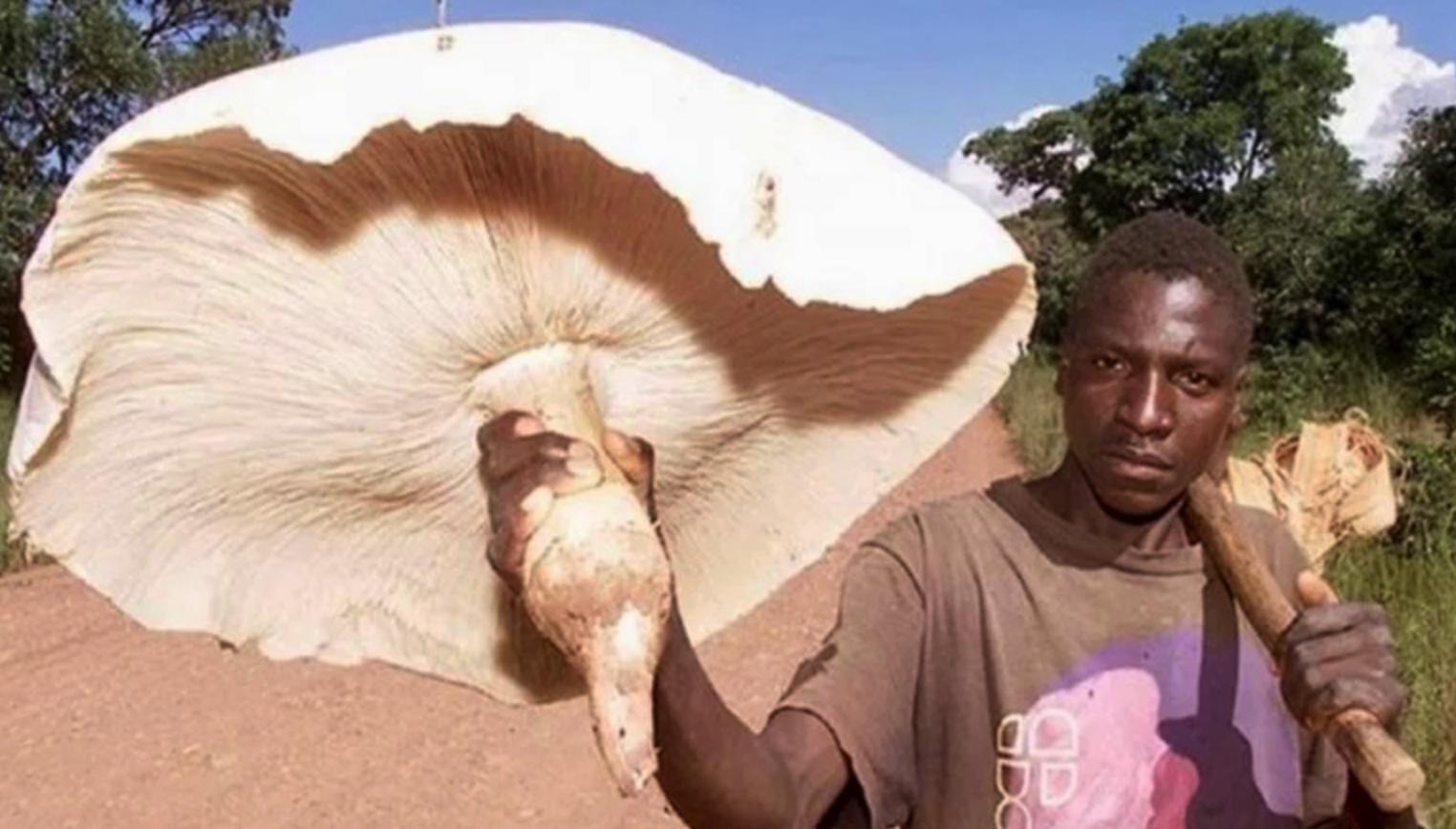
It turns out that fungus growing termites sometimes cultivate Termitomyces titanicus. This is an excellent scientific name. It's a fungi farmed by termites (like ants they do not allow it to produce "fruiting bodies" or mushroom caps while the colony is active.) But when a colony dies it will produce a massive mushroom over a meter wide.
And you can eat it!
Hence the species name.
-
It turns out that fungus growing termites sometimes cultivate Termitomyces titanicus. This is an excellent scientific name. It's a fungi farmed by termites (like ants they do not allow it to produce "fruiting bodies" or mushroom caps while the colony is active.) But when a colony dies it will produce a massive mushroom over a meter wide.
And you can eat it!
Hence the species name.
The fungi farmed by ants (Leucoagaricus gongylophorus) also produces mushrooms when their colonies die out. This fungi can't survive without the ants and the ants propagate it by carrying it with them when they found new nests:
So what is the purpose of the mushrooms?
Is it just a hold-over from the days before the fungi was dependent on ants?
I've been trying to find out if you can eat the ones that grow on old ant nests.
-
The fungi farmed by ants (Leucoagaricus gongylophorus) also produces mushrooms when their colonies die out. This fungi can't survive without the ants and the ants propagate it by carrying it with them when they found new nests:
So what is the purpose of the mushrooms?
Is it just a hold-over from the days before the fungi was dependent on ants?
I've been trying to find out if you can eat the ones that grow on old ant nests.
@futurebird are they completely unable to spread that way, or is it a desperation strategy?
-
It turns out that fungus growing termites sometimes cultivate Termitomyces titanicus. This is an excellent scientific name. It's a fungi farmed by termites (like ants they do not allow it to produce "fruiting bodies" or mushroom caps while the colony is active.) But when a colony dies it will produce a massive mushroom over a meter wide.
And you can eat it!
Hence the species name.
@futurebird funeral umbrella

-
The fungi farmed by ants (Leucoagaricus gongylophorus) also produces mushrooms when their colonies die out. This fungi can't survive without the ants and the ants propagate it by carrying it with them when they found new nests:
So what is the purpose of the mushrooms?
Is it just a hold-over from the days before the fungi was dependent on ants?
I've been trying to find out if you can eat the ones that grow on old ant nests.
@futurebird
Looks like you are trying to convert fungiphiles into ant enjoyers.
I think it might be working...
-
It turns out that fungus growing termites sometimes cultivate Termitomyces titanicus. This is an excellent scientific name. It's a fungi farmed by termites (like ants they do not allow it to produce "fruiting bodies" or mushroom caps while the colony is active.) But when a colony dies it will produce a massive mushroom over a meter wide.
And you can eat it!
Hence the species name.
@futurebird big totoro vibes.
-
@futurebird are they completely unable to spread that way, or is it a desperation strategy?
It's never really found just living on its own without ants to take care of it?
Ant keep it clean, set the correct humidity, feed it plant matter...
In fact, many antkeepers have tried to farm it (so they have extra fungi for their pet ants) and it's basically been impossible for people to do it, even with clean rooms, carefully cut leaves and humidity chambers.
It's totally dependent on ants.
Now... could it maybe float as spores and join an existing ant colony? Maybe? IDK
-
@futurebird funeral umbrella
The size says something about what the termites created. An empire!
-
It's never really found just living on its own without ants to take care of it?
Ant keep it clean, set the correct humidity, feed it plant matter...
In fact, many antkeepers have tried to farm it (so they have extra fungi for their pet ants) and it's basically been impossible for people to do it, even with clean rooms, carefully cut leaves and humidity chambers.
It's totally dependent on ants.
Now... could it maybe float as spores and join an existing ant colony? Maybe? IDK
@futurebird I wonder if you can sample the genetics of colonies and their fungus to work out if the lines of descent always match
-
It turns out that fungus growing termites sometimes cultivate Termitomyces titanicus. This is an excellent scientific name. It's a fungi farmed by termites (like ants they do not allow it to produce "fruiting bodies" or mushroom caps while the colony is active.) But when a colony dies it will produce a massive mushroom over a meter wide.
And you can eat it!
Hence the species name.
@futurebird The mushroom is cool, but also kinda sad.
-
It turns out that fungus growing termites sometimes cultivate Termitomyces titanicus. This is an excellent scientific name. It's a fungi farmed by termites (like ants they do not allow it to produce "fruiting bodies" or mushroom caps while the colony is active.) But when a colony dies it will produce a massive mushroom over a meter wide.
And you can eat it!
Hence the species name.
-
R ActivityRelay shared this topic