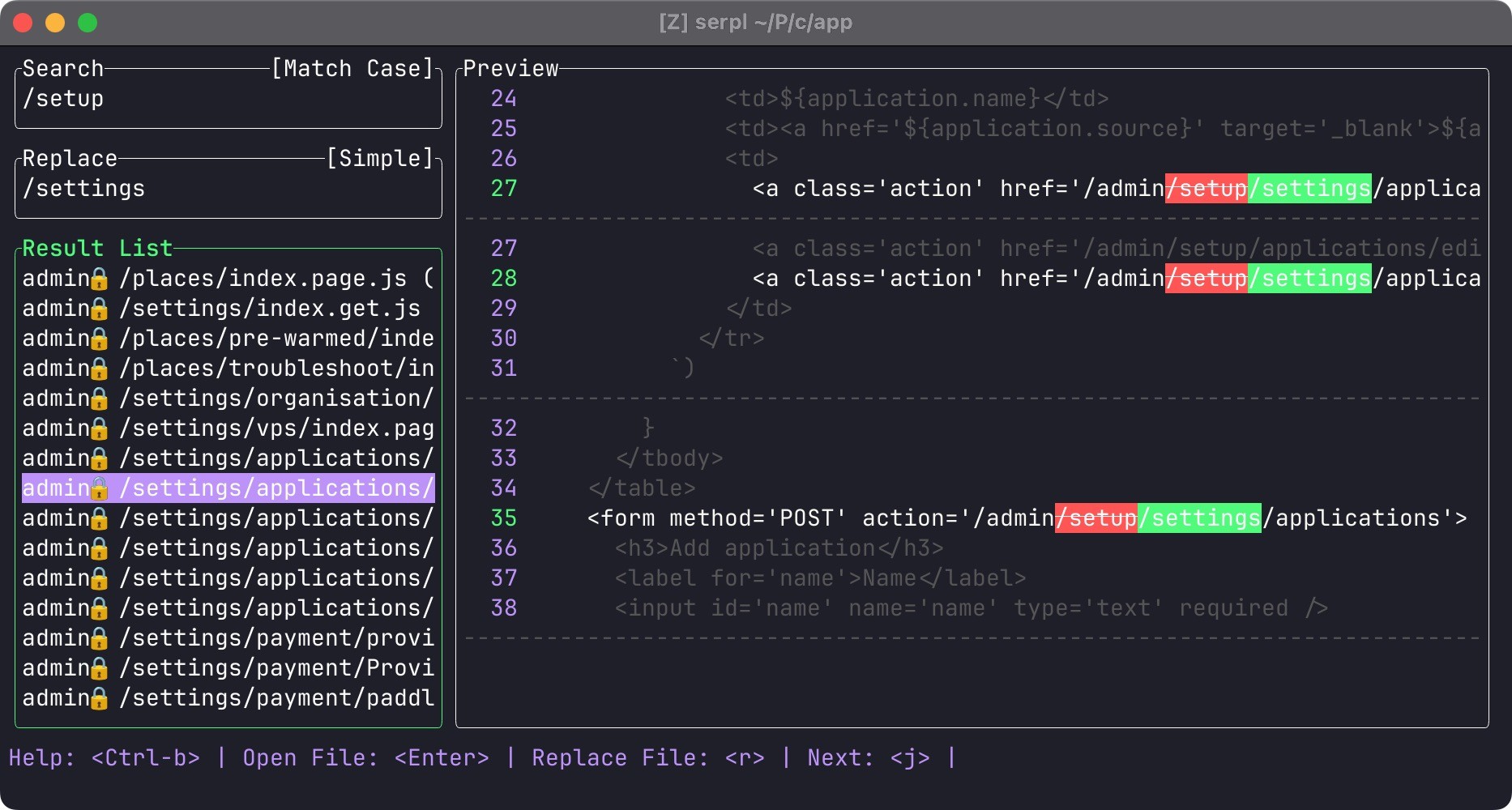
Like global search and replace but don’t like surprises?
-
@ramin_hal9001 @aral I guess you just have to reinvent emacs but in a way that they are not easily interlope-able...
"I guess you just have to reinvent emacs but in a way that they are not easily interlope-able"
@tusharhero@mathstodon.xyz what are you talking about?! You can use Unix pipes to make everything interoperable!!! (Sarcasm)
-
"I guess you just have to reinvent emacs but in a way that they are not easily interlope-able"
@tusharhero@mathstodon.xyz what are you talking about?! You can use Unix pipes to make everything interoperable!!! (Sarcasm)
@ramin_hal9001 @aral That might be true for some programs. But most programs (TUI) are not at all designed for that.
Vim, for example, is not at all like that. I don't know if you can at least pipe buffer regions into programs or not, probably can. But that is something I do all the time inside Emacs.
(I know you are joking).
-
@ramin_hal9001 @aral That might be true for some programs. But most programs (TUI) are not at all designed for that.
Vim, for example, is not at all like that. I don't know if you can at least pipe buffer regions into programs or not, probably can. But that is something I do all the time inside Emacs.
(I know you are joking).
@tusharhero@mathstodon.xyz yes, you gleaned the point I was making exactly.
Terminal apps are basically like cell phone apps, where there is no attempt (beyond copy-paste, or simple message passing, like what Android OS calls "intents") to make programs interoperable at all, because there is basically no infrastructure for it. I mean, sockets exist on most operating systems, but this just forces you to isolate functionality into a client-server architecture with well-defined protocols (DBus, for example), and a lot of these TUI app never even bother with such things. They are just GUIs that use ANSI terminal codes to draw things on screen.
They all operate in isolation, they all have their own unique command line syntax, their own unique configuration scripting syntax, their own unique user interface, you have to relearn everything for each TUI tool you decide to use.
To be fair, Lisp languages (e.g. Emacs) can be just as chaotic, but there is at least more of an attempt to unify all the disparate apps under a single configuration language and UI/UX philosophy. Everything can be scripted using the same, well-defined, turing-complete programming language, and messages are passed between apps using a well-structured and consistent protocol (S-expressions) that is built-in to the system itself.
-
@ramin_hal9001 @aral That might be true for some programs. But most programs (TUI) are not at all designed for that.
Vim, for example, is not at all like that. I don't know if you can at least pipe buffer regions into programs or not, probably can. But that is something I do all the time inside Emacs.
(I know you are joking).
@tusharhero @ramin_hal9001 @aral You definitely can pipe regions of a vim to buffer to a command. I'd say it's even encouraged among vim users.
-
@tusharhero @ramin_hal9001 @aral You definitely can pipe regions of a vim to buffer to a command. I'd say it's even encouraged among vim users.
@tusharhero @ramin_hal9001 @aral @oantolin eshell has nice interoperability with pipes too. i'd love to see an (async-)eshell-command available everywhere in emacs
-
@tusharhero @ramin_hal9001 @aral @oantolin eshell has nice interoperability with pipes too. i'd love to see an (async-)eshell-command available everywhere in emacs
"i'd love to see an (async-)eshell-command available everywhere in emacs"
@mekeor@mastodon.catgirl.cloud do you mean, like
M-x eshell-command?@tusharhero@mathstodon.xyz @aral@mastodon.ar.al @oantolin@mathstodon.xyz
-
"i'd love to see an (async-)eshell-command available everywhere in emacs"
@mekeor@mastodon.catgirl.cloud do you mean, like
M-x eshell-command?@tusharhero@mathstodon.xyz @aral@mastodon.ar.al @oantolin@mathstodon.xyz
@ramin_hal9001 @aral @mekeor @oantolin You go to write it and someone has already written it (I am talking about the function not the toot.)
-
@ramin_hal9001 @aral @mekeor @oantolin You go to write it and someone has already written it (I am talking about the function not the toot.)
@ramin_hal9001 @aral @mekeor @oantolin happens a lot with emacs.
-
@ramin_hal9001 @aral @mekeor @oantolin happens a lot with emacs.
"You go to write it and someone has already written it. happens a lot with emacs."
@tusharhero@mathstodon.xyz yes, it does indeed!
@aral@mastodon.ar.al @mekeor@mastodon.catgirl.cloud @oantolin@mathstodon.xyz
-
@ramin_hal9001 @aral @mekeor @oantolin You go to write it and someone has already written it (I am talking about the function not the toot.)
@ramin_hal9001 @aral @oantolin @tusharhero yes and perhaps also bind a handy key in dired to a new dired-(async-)eshell-command and also perhaps in embark keymaps etc